

24 Apr How to Start a Political Action Committee in Illinois
A Political Action Committee (“PAC”) is an organization that is established to raise and spend money to influence elections or legislation.
PACs can be formed by individuals, organizations, corporations, unions or other groups of people with shared political beliefs or interests. These organizations typically operate independently of political parties or candidates, although they may sometimes support specific candidates or political parties.
This step-by-step guide breaks down the steps on how to start a political action committee in Illinois.
Disclosure
It's important to note that this is a basic overview of the steps required on how to form a political action committee in Illinois. There may be additional requirements depending on the specific type of PAC you are looking to create. It is always recommended that you consult with a legal professional knowledgeable in Illinois campaign finance laws to guide you through the process.
Is this your first PAC? Let’s begin! To form a political committee, you must:
1. Choose a name for your PAC.
The first step in creating your political organization is to choose a name. When choosing a name for your political action committee, there are a few things to consider:
- Make it unique: Choose a name that is unique and hasn’t already been taken by another PAC or organization. This will help avoid confusion and make your PAC more easily identifiable.
- Keep it simple: A simple and straightforward name is often more memorable and easier to remember. Avoid using long or complicated names that may be difficult to pronounce or spell.
- Reflect your purpose: Choose a name that reflects the purpose or values of your PAC. This can make it easier for potential donors or supporters to understand what your PAC stands for and what issues it supports.
- Check if the name is available: You can search the Illinois State Board of Elections website to see if the organization name is available or is already being used by a different group. Also, do yourself a favor and check if the preferred URL or domain name is taken or reserved so that it can later be synchronized with your website.
- Do a little opposition research: Before finalizing your PAC’s name, research to see if it’s already used in political contexts. For example, a PAC name similar to the name of another PAC with different political ideals might prompt some backlash.
- Check for appropriate use: Make sure that the name you choose doesn’t violate any copyright or trademark laws, and that it doesn’t contain any obscenities or offensive words.
By keeping these considerations in mind, you can choose a name that accurately reflects your PAC’s purpose and message while also making it easily identifiable and distinct from other political organizations.
2. Choose the officers of the PAC.
A political action committee in Illinois requires a chairman and treasurer to oversee the activities of the committee. The same person could fulfill both roles, or you can choose different people.
The chairman is responsible for managing all the activities of the PAC, setting up meetings, creating agendas, communicating with members and other stakeholders, and overseeing the operations of the PAC.
The treasurer is in charge of tracking donations and expenditures for the PAC as well as filing reports with the Illinois State Board of Elections. They will also be responsible for making sure funds are spent responsibly according to applicable state laws. The treasurer must be an Illinois resident and must file all necessary paperwork with the State.
When selecting people to fill these roles, it is important to ensure candidates have experience in finance or political management, understand election law, and possess strong organizational skills. It is also important to make sure that both positions are filled by individuals who share a common goal for what they want to achieve through their involvement with the PAC.
3. Apply for a tax EIN.
A political action committee in Illinois is required to apply for an Employer Identification Number (EIN) through the Internal Revenue Service (IRS). An EIN is used by federal and state agencies to identify and track organizations that are required to pay taxes.
How to Apply for an Employer Identification Number (EIN) Online:
- Make sure the person applying online has a valid Taxpayer Identification Number (SSN, ITIN, EIN).
- You are limited to one EIN per responsible party per day.
- You must complete this application in one session, as you will not be able to save and return at a later time. Your session will expire after 15 minutes of inactivity, and you will need to start over.
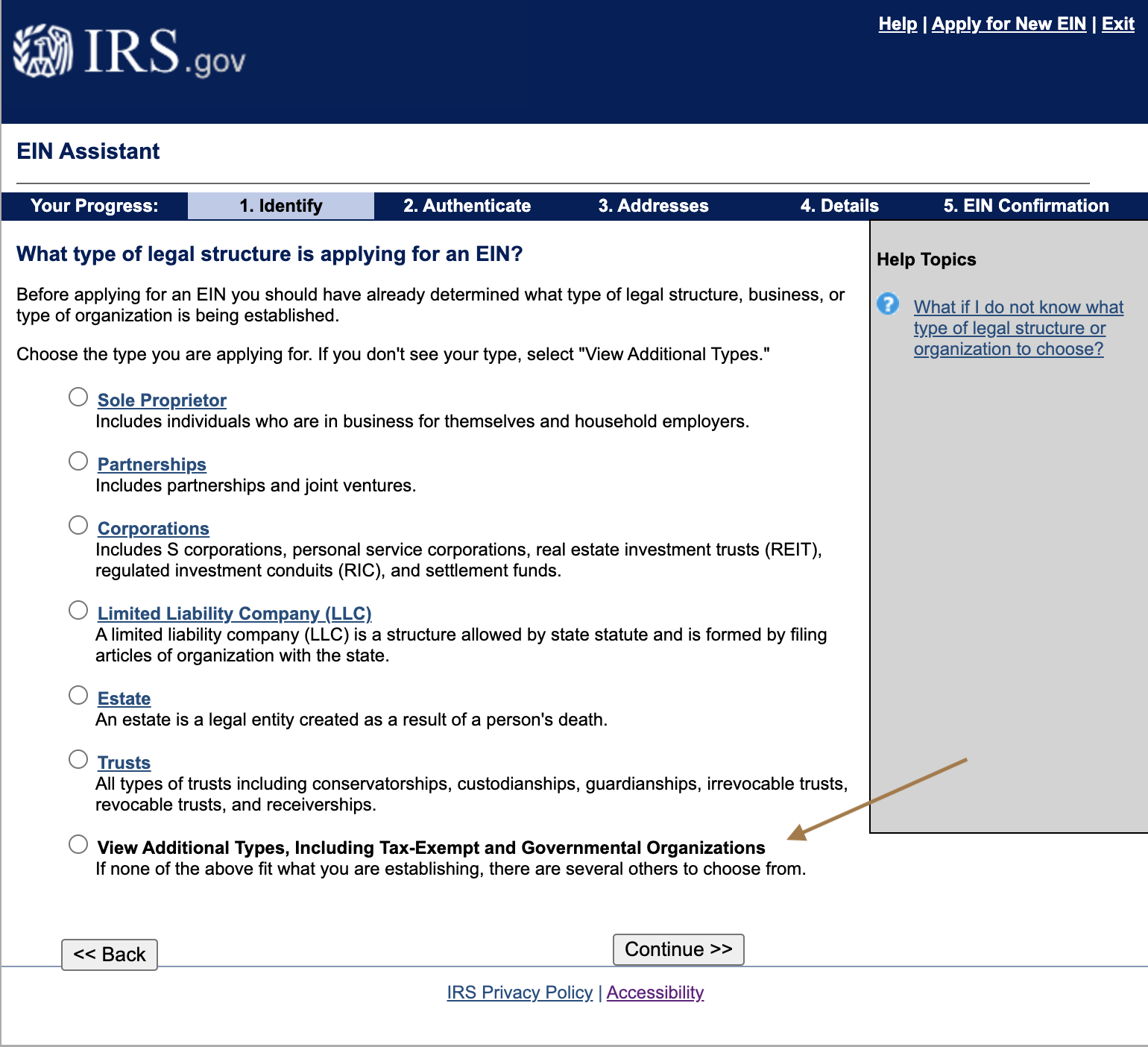
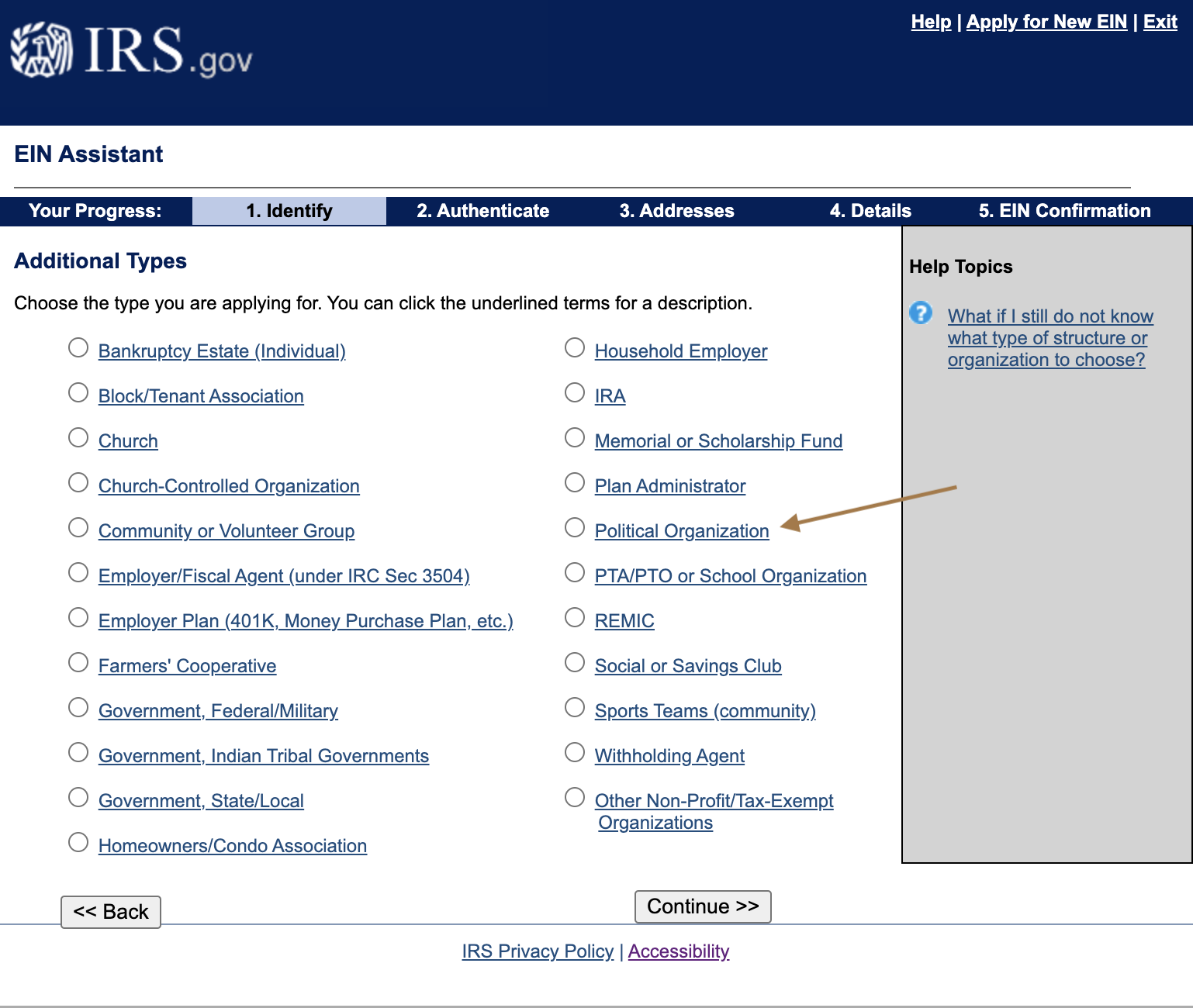
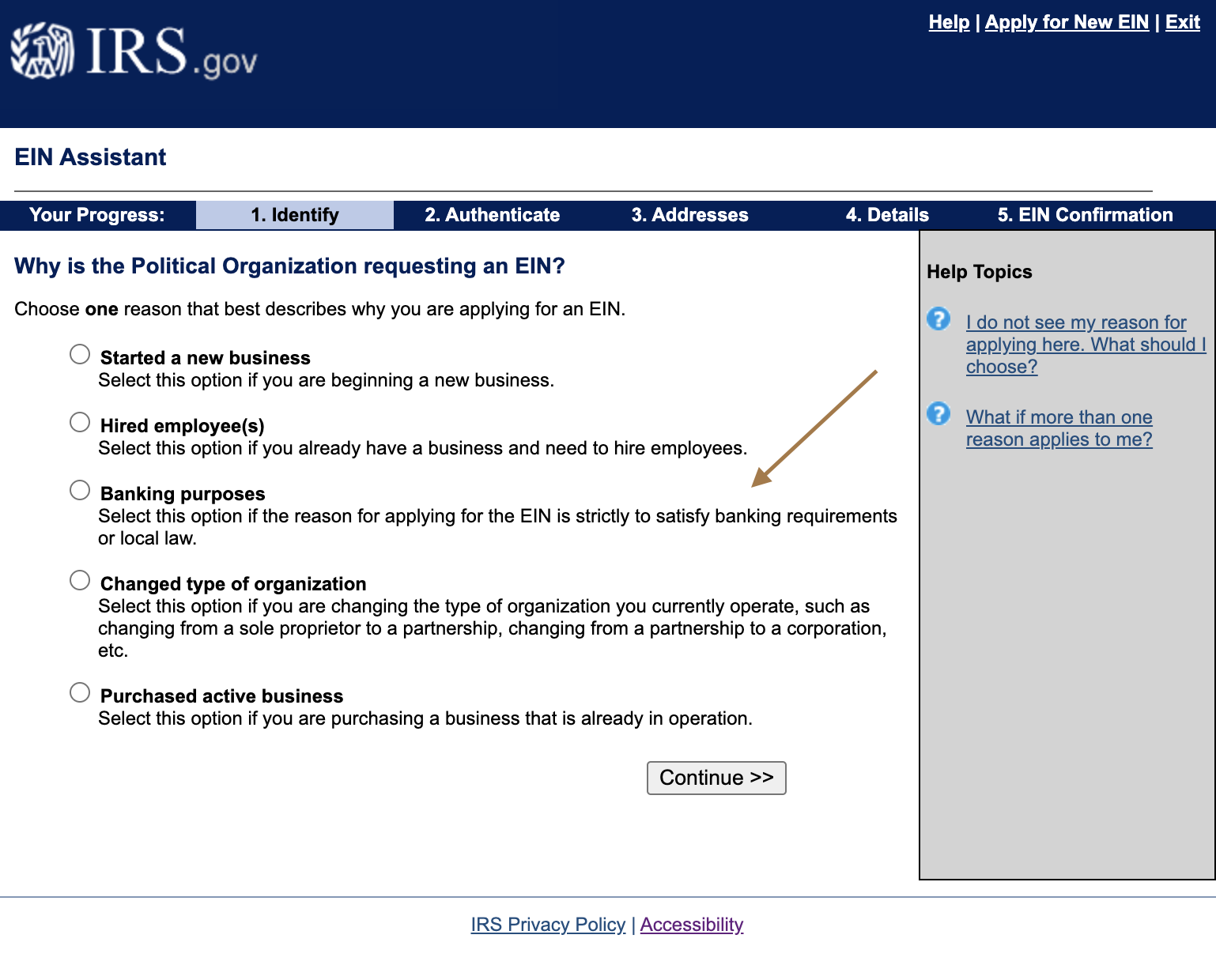
- Choose “political organization” as the type of structure.
- After all validations are done you will get your EIN immediately upon completion. You can then download, save, and print your EIN confirmation notice.
4. Open a bank account.
You will need to open a bank account for your PAC at a financial institution. All funds, expenditures, and political activity for the PAC should be deposited and tracked in this campaign account.
When I open a new bank account for a political action committee, I always use a client of mine, Ipava State Bank. I love that I can do everything through my mobile app, and that I have someone specific to call to handle anything I need.
If you need to open a bank account, feel free to reach out to Jessica Turgeon at jturgeon@ipavastatebank.com (and you can feel free to drop my name!).
5. File a D-1 Statement of Organization.
To register your PAC, you must complete a D-1 Statement of Organization with the Illinois State Board of Elections. This form requires detailed information about your PAC, including its name, address, and purpose.
Download the D-1 Statement of Organization
This form is from the Illinois State Board of Elections.
Once you complete the Statement of Organization form, it must be filed with the Illinois State Board of Elections.
To file your D-1, you must email the completed form to: d1@elections.il.gov.
6. Keep records and file reports.
Once your PAC is registered, you must keep records of all contributions, expenditures, and other financial activities related to the PAC. Campaign records are incredibly important for all registered PACs.
You must also file regular reports with the Board of Elections detailing your PAC’s financial activities. These campaign reports will need to track in-kind contributions and any independent expenditures.
Lastly, you must be careful to follow campaign finance rules under state law. Illinois has set forth laws and rules governing how a PAC can raise and spend funds for the purpose of influencing elections. It is important to follow these rules to avoid penalties or fines. You must familiarize yourself and your team with the campaign finance laws of Illinois. Also, it never hurts to establish a good relationship with local election authorities!
Conclusion
We hope this guide helps you learn how to establish a political action committee in Illinois. At Elking Consulting, we believe advocacy is important and is how change is made.
Starting a political committee in Illinois gives everyday citizens the power to directly lobby for issues they find important. But like anything, successful political campaigning requires careful attention to finances, such as: filing timely disclosure reports, understanding the limitations on donations, and correctly calculating contributions and expenses.
Stay meticulous when following the state’s campaign disclosure laws!
FAQ's
What are the types of political organizations?
There are many different types of political organizations, including political parties, a national party committee or state committee, interest groups, non-governmental organizations (NGOs), labor unions, labor organizations, lobbying groups, membership organizations, a professional association, and think tanks. These organizations represent different ideologies and goals and use various strategies to influence public opinion, policymaking, and other aspects of the political process.
What are the types of political committees?
Political committees can include:
- Political Action Committees (there are several different types of PACs).
- Leadership PACs (political action committees) that are created by elected officials, typically to support other candidates or causes.
- Super PACs that can accept unlimited donations from individuals and corporations.
- Candidate committee that is specifically mandated to support the election of a particular candidate.
- Political Party Committees which raise/spend money on behalf of its candidates and are generally associated with either the Republican or Democratic parties.
- Ballot measure committees that sole purpose and focus is on a specific issue, such as environmental protection or gun control.
- Independent expenditure PACs that do not donate directly to candidates or coordinate spending with them. Independent expenditure committees can only purchase ads in support of a particular candidate or cause, pay for polling and research, and hire staff members who will be working on behalf of the cause without interfering with the candidate’s campaign activities.
- Joint fundraising committees which allow multiple candidates and groups to pool funds and share resources.
What is a political action committee?
A political action committee (PAC) is an organization that advocates for or against a specific cause, such as a particular political party or candidate. PACs are organized and funded by individuals, corporations, unions, trade associations, nonprofits, ideological groups, and other special interest organizations.
The goal of a PAC is to influence the outcomes of elections by providing financial contributions to candidates in support of their stance on various issues. PACs can also work to raise public awareness about important issues through advertising campaigns, grassroots mobilization efforts, and other outreach initiatives.
What is the purpose of a political action committee?
The purpose of a Political Action Committee (PAC) in Illinois is to raise money and promote their agenda. A PAC may support candidates, ballot measures, issue advocacy, or grassroots campaigns. PACs can also lobby state and local governments, as well as federal agencies and officials.
How does a political action committee work?
A Political Action Committee (PAC) works by raising funds to support their agenda and promote their beliefs.
PACs typically use the money they raise to finance campaigns, run ads, support candidates, or pay for other activities related to promoting their political goals. They also engage in lobbying efforts with state and federal agencies and officials in order to further their agenda.
In Illinois, a PAC must be registered with the State Board of Elections, and all contributions must be reported so that they can be tracked and monitored.
What is an example of a political action committee’s agenda?
Examples of a Political Action Committee's (PAC) agenda in Illinois could include:
- Support of a candidate who share the PAC’s political ideology
- Defeat of a candidate who does not share the PAC's political ideology
- Promote ballot measures that align with the PAC’s values
- Advocate for specific issues such as education, health care, or environmental protection
- Finance grassroots campaigns to increase voter turnout and civic engagement in their local community
Are political action committee donations tax-deductible?
No, donations to a political action committee in Illinois are not tax-deductible. Donations to a PAC are generally considered political contributions and therefore are not subject to the same tax laws as charitable contributions.
Does a PAC need a tax EIN?
Yes, a political action committee in Illinois is required to apply for an Employer Identification Number (EIN) through the Internal Revenue Service (IRS). An EIN is used by federal and state agencies to identify and track organizations that are required to pay taxes.
Do political action committees pay taxes?
Generally speaking, Political Action Committees (PACs) are registered with the Internal Revenue Service (IRS) either as Section 527 organizations or Section 115 organizations. PACs registered as Section 527 organizations must file a tax form, known as a 527-EZ. This form is used to report contributions, expenditures, and other financial information such as investments and non-cash contributions. If a PAC does not have any taxable income, then it does not need to pay taxes. However, if the PAC does have taxable income from sources such as sales of goods, services or real estate, then it will be required to file Form 990-T and pay taxes on those profits.
What is the purpose of contribution limits?
The purpose of contribution limits is to prevent individuals, corporations, and other groups from having too much influence on the electoral process. By limiting the amount of money that an individual can give to a political campaign or committee, it helps ensure that no single person or entity has the potential to sway election results. Additionally, contribution limits are designed to eliminate potential corruption in politics by reducing the possibility of bribery and undue influence over elected officials.
Are political action committees good?
Political Action Committees can be a powerful tool for advocating for a particular agenda and influencing the political process. They have the potential to generate large amounts of money to support their candidate or cause of choice, as well as develop public awareness and build coalitions. However, PACs also need to be held accountable so that they are not misusing funds and acting in an unethical way. Ultimately, whether or not a PAC is deemed "good" depends on the terms of its mission, how it is managed and conducted, and whether it follows all applicable laws.